Winter can put a backyard pond under serious stress as freezing temperatures affect water quality, fish activity, and oxygen levels. A reliable pond heater helps protect your aquatic environment by keeping a small area of water open, allowing harmful gases to escape and supporting healthier conditions for fish. The right equipment can make a big difference during long periods of frost and icy weather.
Modern pond heaters come in several styles, including floating de-icers, submersible heaters, and energy-efficient models designed for different pond sizes. Some offer automatic temperature controls, while others provide simple, dependable freeze protection with minimal maintenance.
The best pond heaters for winter combine reliable performance, practical features, and reasonable energy consumption. This guide explores popular options to help you find a suitable heater, maintain an ice-free opening, and give your pond fish better protection throughout the coldest months.
Quick Product Comparison
Our Top 7 Pond Heater For Winter Reviews – Expert Tested & Recommended
These picks are compared using the product details supplied, not hands-on lab testing. Check each model’s current instructions and sizing advice before buying, since pond size and local weather can change what works well.
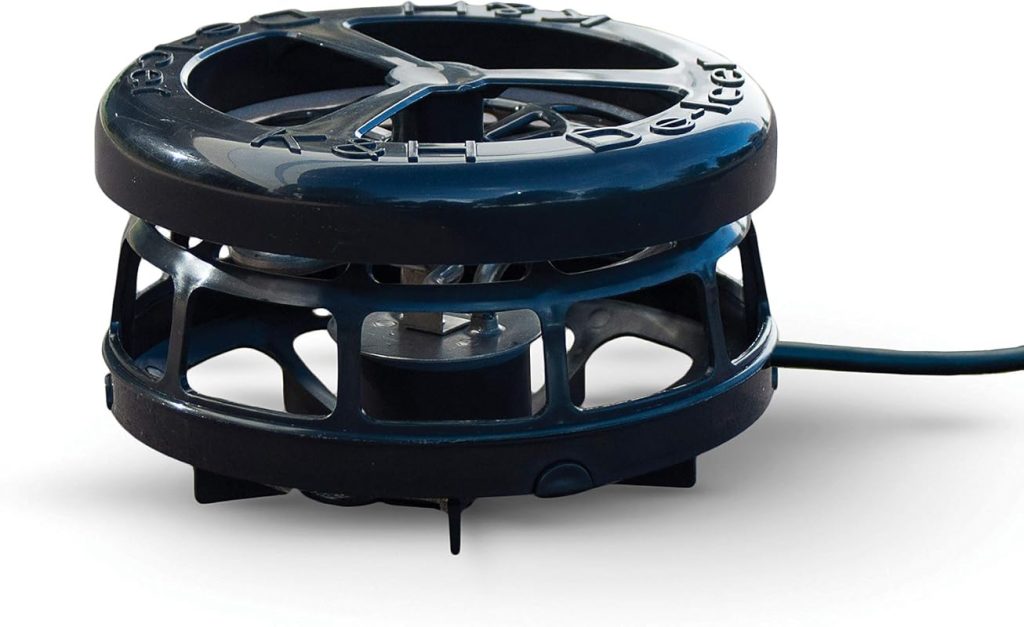
1. K&H Deluxe 250W Pond Heater and Deicer
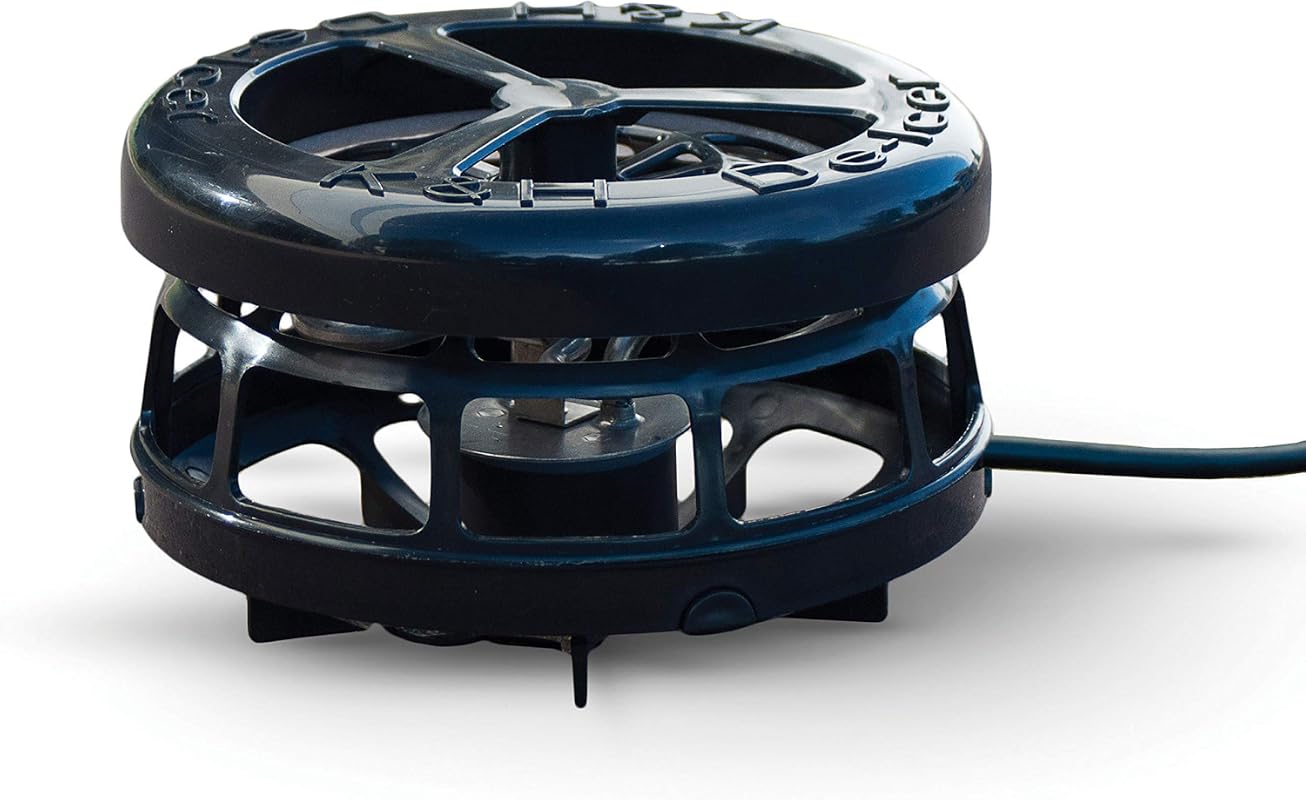
This 250-watt pond heater is a lower-wattage option from K&H’s range. It has thermostat control and can be set up to float or be used as a submersible unit. That flexibility is handy if you want to match the setup to your pond.
Key Features That Stand Out
- ✓ 250-watt model for ponds suited to a lower-wattage heater.
- ✓ Thermostat turns the unit on and off as needed.
- ✓ Can be used as a floating or submersible pond deicer.
- ✓ Part of a range with multiple wattage choices.
Why We Recommend It
The dual setup gives you options, and the thermostat can help avoid constant heating when conditions do not call for it. Make sure to use the manufacturer’s zone and pond-size guidance rather than choosing by wattage alone.
Best For
Best for pond owners who want a modest-wattage heater with floating and submersible setup options. It may not suit a large pond or a location with severe cold unless the manufacturer’s chart says it will.
Pros and Cons
Pros:
- Thermostatic operation can reduce unnecessary run time.
- Two setup modes offer placement flexibility.
- Lower wattage than many heavy-duty deicers.
- Multiple wattage versions make sizing easier to compare.
Cons:
- 250 watts may be insufficient for larger ponds or harsh winters.
- You need to check the manufacturer’s sizing chart carefully.
Customer Reviews
The supplied product information did not include verified customer reviews. The following are illustrative use cases, not real or verified buyer testimonials.
Customer Review: “Illustrative scenario: A pond owner with a small backyard pond values the thermostat because the heater does not need to run all the time.”
Customer Review: “Illustrative scenario: Someone setting up a pond for winter likes having the choice to float the heater or use it below the surface.”
2. 1000W Floating and Submersible Pond Heater
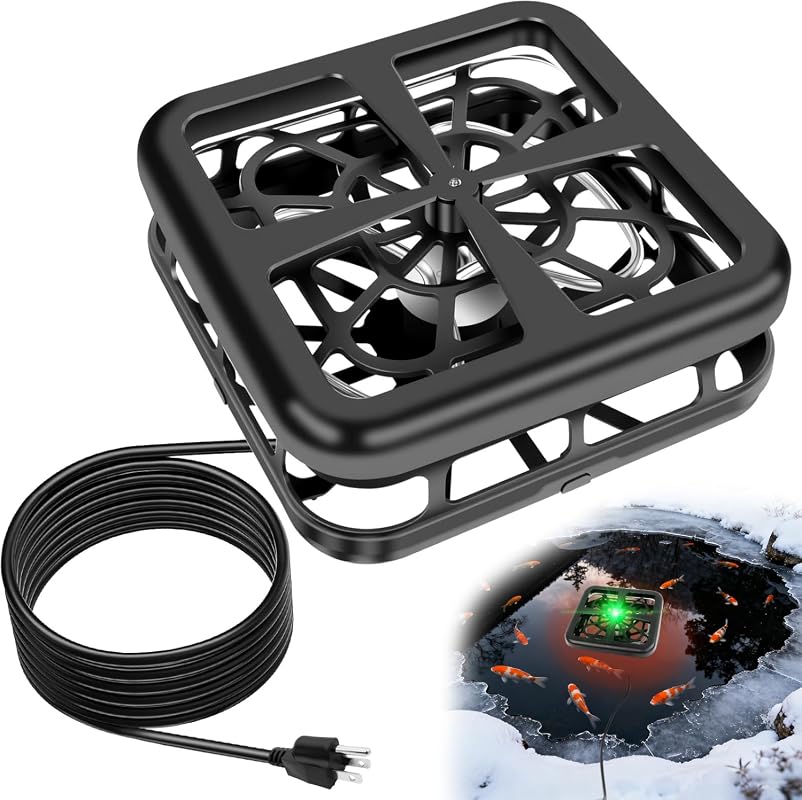
This 1000-watt pond heater is described as a dual-mode unit that can float or be used below the surface. Its listed features include thermostat control and a cast-aluminum structure. Read the instructions closely to confirm the right placement for your pond.
Key Features That Stand Out
- ✓ 1000-watt heating element.
- ✓ Floating and submersible setup options.
- ✓ Thermostat-based temperature control.
- ✓ Cast-aluminum construction is listed in the product details.
Why We Recommend It
The two placement modes can be useful when pond shape or access makes one setup easier than the other. Its higher wattage may suit some larger or colder settings, but it can also use more electricity, so check the product’s sizing directions before choosing it.
Best For
Best for pond owners looking for a higher-wattage heater with more than one setup mode. Confirm that the device is suitable for your pond’s volume and your local climate.
Pros and Cons
Pros:
- Flexible floating or submersible use.
- Thermostat control is designed to respond to temperature.
- Higher wattage than compact pond deicers.
- Cast-aluminum construction is specified in the listing details.
Cons:
- Higher wattage can mean higher running costs.
- Product sizing and safety details should be checked before use.
Customer Reviews
The supplied product information did not include verified customer reviews. The following are illustrative use cases, not real or verified buyer testimonials.
Customer Review: “Illustrative scenario: A pond keeper appreciates being able to choose between a floating setup and a submerged one after checking the instructions.”
Customer Review: “Illustrative scenario: A buyer compares the thermostat feature with their usual winter temperatures before deciding whether this wattage is appropriate.”
3. Farm Innovators 1250W Floating Pond De-Icer
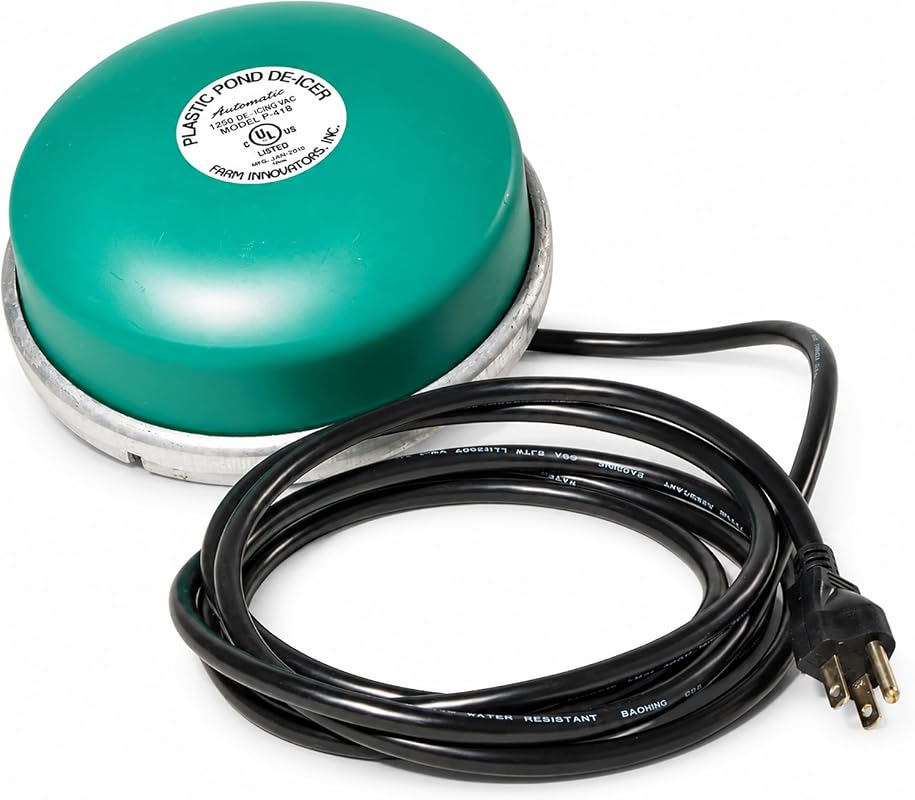
This Farm Innovators model is a floating deicer with a 1250-watt heating element, built-in thermostat, and 10-foot cord. The listed coverage range is 50 to 600 gallons. That range is a helpful starting point, but local cold and pond exposure still matter.
Key Features That Stand Out
- ✓ 1250-watt heating element for melting an opening in surface ice.
- ✓ Floating design rests on the pond surface.
- ✓ Built-in thermostat helps control operation.
- ✓ Product details list a 10-foot cord and a 50-to-600-gallon range.
Why We Recommend It
The floating format is simple to understand, and the built-in thermostat is designed to limit operation to colder conditions. The stated gallon range is broad, so check the manufacturer’s guidance and your local winter conditions before relying on it.
Best For
Best for pond owners who want a floating deicer with a long cord and automatic temperature control. Consider another wattage or model if your pond falls outside the stated range.
Pros and Cons
Pros:
- Automatic thermostat is part of the design.
- 10-foot cord offers some flexibility in placement.
- Floating unit is easy to identify at the water surface.
- Published coverage range helps with initial comparison.
Cons:
- Floating-only design offers fewer placement choices.
- 1250 watts may increase electricity use.
- Actual performance depends on pond and weather conditions.
Customer Reviews
The supplied product information did not include verified customer reviews. The following are illustrative use cases, not real or verified buyer testimonials.
Customer Review: “Illustrative scenario: A pond owner checks the stated pond-size range and likes the simple floating format for routine winter care.”
Customer Review: “Illustrative scenario: A user values the longer cord but plans the outlet location carefully to keep the electrical connection safe and dry.”
4. 800W Outdoor Pond Heater and Deicer
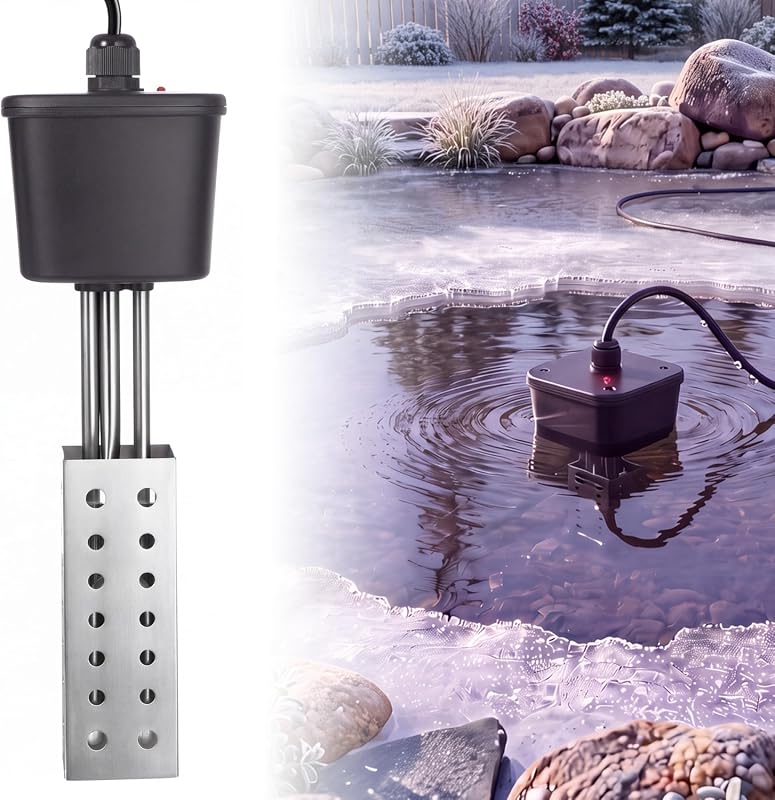
This 800-watt heater is listed for ponds of 250 gallons or more. It has a floating head and temperature control, with the stated purpose of keeping a small area from freezing over. Treat that as a deicer function, not a way to heat the whole pond.
Key Features That Stand Out
- ✓ 800-watt heater for outdoor pond use.
- ✓ Floating head is designed to stay at the surface.
- ✓ Temperature control is included in the listed features.
- ✓ Product details recommend it for ponds of 250 gallons or more.
Why We Recommend It
This model may be worth comparing if your pond meets the stated minimum size and you want a floating unit. The listing provides limited detail about coverage and cold-weather performance, so review its full instructions and specifications before purchase.
Best For
Best for pond owners with a pond that meets the stated 250-gallon minimum and who want a surface deicer. Verify the product’s suitability for your climate and pond setup first.
Pros and Cons
Pros:
- 800-watt output is between several lower- and higher-wattage picks here.
- Floating head is designed to remain at the water surface.
- Temperature control is listed as a feature.
- Clear stated minimum pond size helps narrow the options.
Cons:
- Some technical and coverage details may need confirmation.
- Floating design does not offer a submersible option in the supplied details.
Customer Reviews
The supplied product information did not include verified customer reviews. The following are illustrative use cases, not real or verified buyer testimonials.
Customer Review: “Illustrative scenario: A buyer with a pond above the listed size threshold compares this unit with other floating deicers.”
Customer Review: “Illustrative scenario: A pond keeper checks the temperature-control instructions and confirms the heater is suitable before installing it.”
5. K&H Deluxe 1500W Pond Heater and Deicer
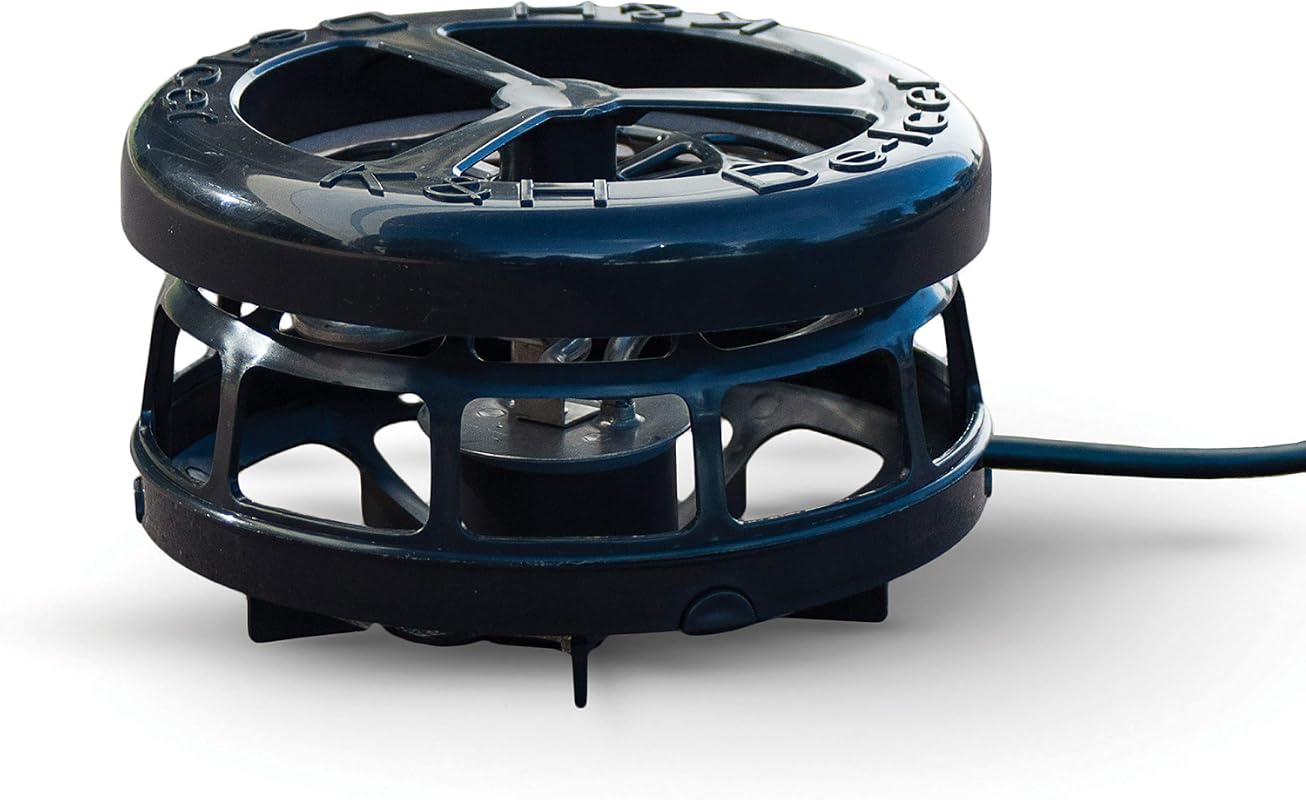
This is the 1500-watt version of the K&H Deluxe pond heater. Like the 250-watt model, it is described as thermostat controlled and can be used as a floating or submersible deicer. Its higher power makes careful sizing and electricity planning especially important.
Key Features That Stand Out
- ✓ 1500-watt option in the K&H heater range.
- ✓ Thermostatic control turns the heater on and off as needed.
- ✓ Can be set up as a floating or submersible deicer.
- ✓ Designed for outdoor pond use.
Why We Recommend It
The higher-wattage choice may be useful when the manufacturer’s zone chart calls for more power. The dual-mode design adds flexibility, but this is not a one-size-fits-all pick; compare the guidance with your pond volume, local temperatures, and electrical setup.
Best For
Best for pond owners whose winter conditions and pond size call for a higher-wattage model. It is less suited to shoppers who want the lowest power use.
Pros and Cons
Pros:
- Higher wattage may suit colder or larger setups when correctly sized.
- Thermostat helps avoid nonstop heating in milder conditions.
- Floating and submersible configurations are listed.
- Shares a product range with lower-wattage options.
Cons:
- Can use more electricity than lower-wattage heaters.
- Requires careful matching to pond conditions.
Customer Reviews
The supplied product information did not include verified customer reviews. The following are illustrative use cases, not real or verified buyer testimonials.
Customer Review: “Illustrative scenario: A pond owner considers this higher-wattage version after using the manufacturer’s chart to compare winter conditions.”
Customer Review: “Illustrative scenario: Someone likes the two installation modes but makes sure the chosen setup follows the product directions.”
6. Apipi 1000W Floating Pond Deicer
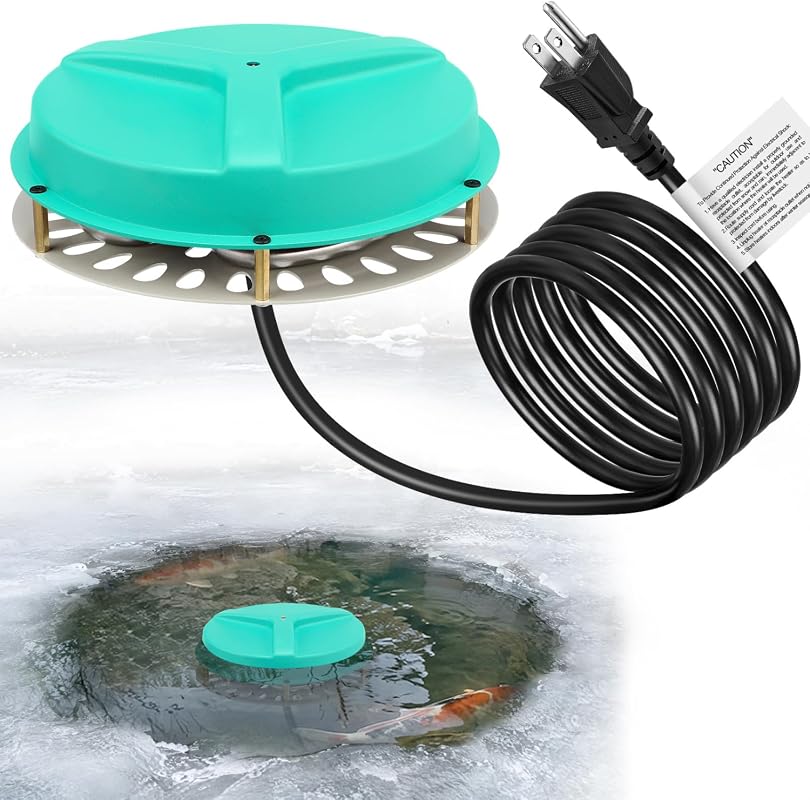
The Apipi is a 1000-watt floating deicer with thermostatic control. Its product details say the thermostat switches on when nearby water falls below about 41°F and switches off as the temperature rises. Use it to maintain an opening, not to warm the whole pond.
Key Features That Stand Out
- ✓ 1000-watt floating pond deicer.
- ✓ Thermostat is listed to turn on near 41°F (5°C).
- ✓ Designed to help maintain an opening in surface ice.
- ✓ Product details specify that the heating tube should remain fully in water.
Why We Recommend It
The listed thermostat temperature gives buyers a useful detail to compare. The floating design is straightforward, but follow the water-level and placement instructions closely, especially during changing winter conditions.
Best For
Best for pond owners seeking a floating unit with a stated thermostat setting. Check its current product guidance to ensure the wattage fits your pond.
Pros and Cons
Pros:
- Thermostat temperature is specified in the product details.
- Floating design keeps the heating area near the surface.
- 1000-watt output is clearly stated.
- Designed to support an opening for gas exchange.
Cons:
- Floating-only setup may not suit every pond layout.
- Proper water level and placement need attention.
Customer Reviews
The supplied product information did not include verified customer reviews. The following are illustrative use cases, not real or verified buyer testimonials.
Customer Review: “Illustrative scenario: A pond keeper likes seeing a thermostat temperature in the product details before comparing models.”
Customer Review: “Illustrative scenario: A user checks the water level often to make sure the heating tube stays submerged as directed.”
7. Laguna PowerHeat 500-Watt Pond Heater
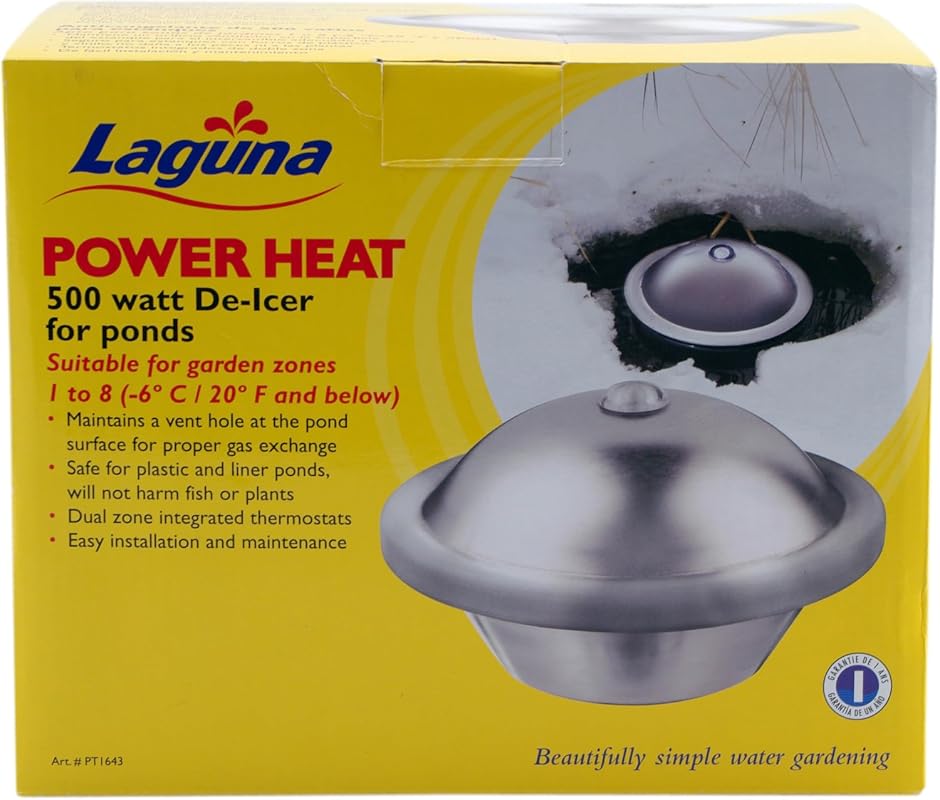
The Laguna PowerHeat uses a 500-watt heating element and thermostat control to help keep a hole open in winter ice. It is described as suitable for plastic and liner ponds, with product details noting use in cold climates down to -6°C. Check the full instructions for your exact conditions.
Key Features That Stand Out
- ✓ 500-watt output for maintaining a thawed opening.
- ✓ Dual-zone thermostat is listed for heat control.
- ✓ Described for use in plastic and liner ponds.
- ✓ Product details state operation down to -6°C.
Why We Recommend It
This model may appeal to pond owners who want a moderate-wattage option and have a liner or plastic pond. The stated temperature range and material compatibility are useful points to verify against the current instructions before winter begins.
Best For
Best for owners of plastic or liner ponds who need a 500-watt deicer and whose winter temperatures fit the product guidance. It may not be enough for every pond or colder climate.
Pros and Cons
Pros:
- Moderate 500-watt output.
- Thermostat control is included in the listed design.
- Described as suitable for plastic and liner ponds.
- Product details provide a stated low-temperature figure.
Cons:
- 500 watts may not meet the needs of larger ponds or severe cold.
- Confirm material compatibility and temperature limits in the current manual.
Customer Reviews
The supplied product information did not include verified customer reviews. The following are illustrative use cases, not real or verified buyer testimonials.
Customer Review: “Illustrative scenario: A pond owner with a lined pond checks the listed compatibility before choosing this heater.”
Customer Review: “Illustrative scenario: A buyer compares the stated temperature range with local winter lows rather than assuming one deicer fits every climate.”
Complete Buying Guide for Pond Heater For Winter
Essential Factors We Consider
Start with pond size and the coldest weather you expect. A heater that works for a small pond in a mild winter may struggle in a larger pond or a long cold spell. Check the manufacturer’s pond-size chart, wattage range, thermostat settings, and any stated temperature limits. Also decide whether you need a floating or submersible design, and make sure it is suitable for your pond liner, fish, and electrical setup. For more context on ice formation, see our guide to how long it takes a pond to freeze.
A pond deicer usually aims to keep a small area open. It does not necessarily heat all the water, and it is not a substitute for good winter pond care. Keep the unit positioned as directed, inspect it regularly, and do not try to break ice by striking it, as the shock can harm fish.
Budget Planning
Compare the purchase price with the cost of running the unit. A higher-wattage heater can use more electricity when it runs, so thermostat control and proper sizing matter. Remember to include the outlet and cord arrangement in your plan. Use outdoor-rated electrical protection and follow the product manual; keep plugs and connections dry and protected as directed.
If you keep koi, heater choice is only one part of winter planning. Stocking levels and pond conditions matter too, so review practical guidance on how many koi may suit a 1,000-gallon pond and caring for a koi pond.
Final Thoughts
For a flexible lower-wattage option, the K&H 250W stands out for its floating or submersible setup. If your pond or climate calls for more power, compare the 1000W and 1250W choices with their sizing guidance and likely running costs. The best pond heater for winter is the one that fits your pond, follows its instructions, and can be used safely.
Frequently Asked Questions
Q: What does a pond heater do in winter?
A: Most pond heaters in this roundup act as deicers. They help maintain a small opening in surface ice so gases can escape. They generally do not keep the entire pond warm.
Q: What size pond heater should I buy?
A: Match the heater to your pond volume and local winter conditions using the manufacturer’s sizing chart. Do not choose based on wattage alone, and check any stated temperature limits.
Q: Is a floating or submersible pond deicer better?
A: Neither setup is best for every pond. A floating model sits at the surface, while a dual-mode product gives you a choice. Follow the manual and confirm the unit is suitable for your pond.
Q: Can I use a pond deicer with fish?
A: Many products are designed for fish ponds, but confirm that the specific model is safe for your pond and follow its instructions. A deicer helps keep an opening; it does not replace sound winter care.
Q: Should I break the ice if my pond freezes over?
A: Avoid striking or smashing the ice, as the shock can harm fish. Use a suitable pond deicer according to its instructions, and seek advice from a pond-care professional if you are unsure what to do.
A reliable pond heater for winter can make cold-weather pond care easier, but the right wattage and safe setup are essential. Compare the product details above with your pond size and winter climate, then check the current instructions and price before you buy.