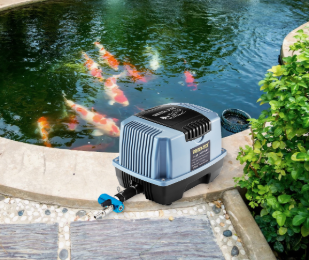
Keeping a koi pond clean, clear, and healthy is one of the most important parts of successful koi keeping. Koi fish are beautiful and graceful, but they are also messy. They produce waste, stir up sediment, and contribute to algae growth if your pond doesn’t have an effective filtration system. Without proper filtration, ammonia and nitrite levels can spike, water can become cloudy or green, and your koi are at risk of stress or disease.
A good pond filter removes solid waste, supports beneficial bacteria for biological filtration, and often includes a UV clarifier to control algae. Pond filters come in many sizes and styles, but for most backyard koi ponds, pressurized biological filters offer a reliable, efficient, and relatively easy solution. They are external units that work with a pond pump to draw water through layered filter media, then return clean water back into the pond.
In this comprehensive article, we’ll take you through some of the best pond filters available on Amazon.com for koi ponds of different sizes. We’ll explain their features, capacities, how they work, and highlight pros and cons to make it easier for you to choose the right system for your setup.
What to Look for in a Koi Pond Filter
Before we jump into product recommendations, it’s helpful to understand the basics of what makes a great koi pond filter.
Filtration Types
There are three main types of filtration:
-
Mechanical Filtration — Removes physical debris and waste particles from water.
-
Biological Filtration — Encourages growth of beneficial bacteria that help convert toxic ammonia into less harmful nitrates.
-
UV Clarification — Uses ultraviolet light to kill algae and microscopic organisms that make water green.
Flow Rate & Pond Size
Match your filter’s capacity (measured in gallons per hour, or GPH) to your pond volume. As a rule of thumb:
-
Use higher GPH ratings for larger koi ponds.
-
Always pair pressure filters with a pump of equal or higher capacity than the filter’s rating.
Ease of Cleaning
A good pond filter should be easy to clean and maintain. Many units feature a backflush or “clean” setting so you don’t have to dismantle the entire filter to flush out debris.
Best Pond Filters for Koi Fish
1. VIVOHOME Pressurized Biological Pond Filter, 1840GPH
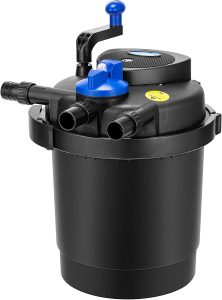
The VIVOHOME Pressurized Biological Pond Filter is an excellent all-around choice for medium-sized koi ponds. It offers a powerful flow rate of up to 1840 gallons per hour, making it suitable for ornamental ponds up to 2100 gallons and fish ponds up to roughly 1000 gallons. The system uses both mechanical and biological filtration to keep water clean and healthy for koi.
This filter system combines coarse and fine sponges with bio balls that offer surface area for beneficial bacteria, accelerating the nitrogen cycle. A built-in 13-watt UV clarifier helps reduce algae and keep water visually clear. You can switch between “Filter” and “Clean” modes with a simple control, and a backflush design removes debris without opening the unit.
Pros
-
Strong filtration and flow rate for mid-sized ponds.
-
UV clarifier helps control algae.
-
Easy backflush and maintenance.
-
Suitable for koi and ornamental ponds.
Cons
-
Requires a compatible external pump (not included).
-
ABS plastic housing may feel less rugged than commercial models.
-
Regular cleaning required in high bio-load situations.
2. VEVOR Pressurized Biological Pond Filter, 2630 GPH (Up to 3200 gal)
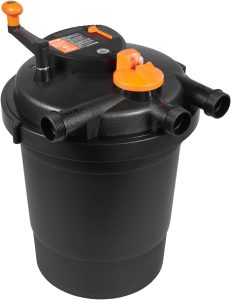
For larger koi ponds, the VEVOR Pressurized Biological Pond Filter offers a much higher flow rate at about 2630 gallons per hour and can handle decorative ponds up to 3200 gallons or fish ponds up to around 1600 gallons. Its larger capacity makes it ideal if you have more koi or a bigger water garden.
This system features multiple layered sponges of different densities to trap large debris and fine particulates before the water passes through bio media that encourage beneficial bacteria growth. A 13W UV-C lamp helps to control algae and clarify the water column. Cleanup is simple: when the turbidity indicator rises, turn the cleaning handle to flush debris out.
Pros
-
High flow rate suitable for larger koi ponds.
-
UV-C clarifier reduces algae and turbidity.
-
Easy internal sponge cleaning.
-
Includes adapter sizes for easy installation with multiple hose sizes.
Cons
-
Larger footprint means it needs more space beside your pond.
-
Requires an external pump to reach full capacity.
-
Slightly more expensive than smaller models.
3. Flexzion Bio Pressure Pond Filter with UV-C Light Clarifier
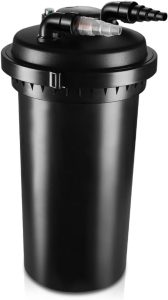
The Flexzion Bio Pressure Pond Filter is a great middle ground option for koi pond owners who want both strong filtration and effective algae control. Rated for ponds between roughly 1100 and 2200 gallons, it uses a UV-C clarifier and multiple filter layers to help water stay clear and balanced.
Flexzion’s design includes coarse and fine sponge stages to catch particles of different sizes, plus media that support biological filtration. The integrated UV-C light reduces algae and harmful organisms that contribute to green water problems. This model fits well in ponds that are too large for basic filters but not big enough to justify professional-grade systems.
Pros
-
Combines mechanical, biological, and UV filtration in one unit.
-
Suitable for medium to larger koi ponds.
-
Reduces algae and suspended particles.
-
Durable pressurized housing.
Cons
-
Requires external pump (not included).
-
UV bulb replacement adds long-term maintenance cost.
-
Backflush might not remove all debris without additional cleaning.
4. TotalPond Complete Pond Filter with UV Clarifier
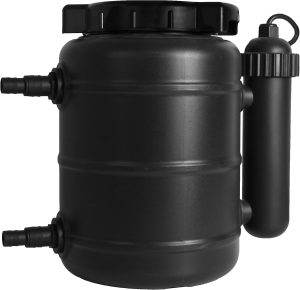
While not a single-brand name seen in all searches, the TotalPond Complete Pond Filter with UV Clarifier is featured in filtered Amazon listings and is a solid choice for koi pond owners looking for combined mechanical, biological, and UV filtration. It’s compact yet effective for small to medium ponds up to around 1200 gallons.
This system uses internal filter media to capture debris and establish a healthy bacteria colony while the UV element reduces green water and microscopic organisms. It relies on a separate submersible pump (not usually included) to circulate water.
Pros
-
Complete filtration system in one unit.
-
Built-in UV reduces algae and microorganisms.
-
More compact than large pressurized filters.
-
Can be paired with various pump sizes.
Cons
-
Not ideal for very large koi ponds.
-
May need annual media replacement.
-
Needs careful sizing with the correct pump.
How to Choose the Right Pond Filter for Your Koi Pond
Selecting the right pond filter depends on several key factors:
Pond Volume and Stocking Level
Know your pond’s volume in gallons and estimate how many koi you have. Heavily stocked ponds with many large koi need much more filtration capacity than lightly stocked ponds. Bigger, more powerful filters (higher GPH ratings) help maintain water quality in busy systems.
Pump Compatibility
Most pressurized filters rely on a separate pump to push water through the media. Choose a pump that matches or slightly exceeds your filter’s GPH rating for efficient performance.
Maintenance and Cleaning
Filters with easy backflush systems or clear cleaning indicators save time and make pond keeping more enjoyable. Plan to clean sponges and media regularly, especially during high-growth seasons.
UV vs. Non-UV
UV clarifiers help keep water visibly clear by controlling algae and tiny organisms, but bulbs eventually wear out. Decide whether built-in UV is worth the maintenance for your situation.
Frequently Asked Questions (FAQs)
How often should I clean my pond filter?
Cleaning depends on fish load, pond size, and filter type. Many pressurized filters require backflushing once a week or when the cleaning indicator rises. Larger systems may need less frequent attention.
Do I need a separate pump?
Most pond filters listed here require a separate pond pump to move water through the filter. Make sure your pump’s flow aligns with the filter rating.
Can a filter handle algae by itself?
Filters help, but algae also depend on sunlight and nutrients. A UV clarifier helps control algae, but shade, plants, and proper pond management also play roles.
Will my koi be healthy with these filters?
Yes — proper biological and mechanical filtration supports beneficial bacteria that keep ammonia and nitrites low, which is critical for koi health.
Conclusion
A pond filter is one of the most important investments you can make if you keep koi. Clear water and a balanced aquatic environment not only make your pond more beautiful; they also help protect your fish from stress and disease. In this article, we’ve highlighted a range of excellent options, from the capable VIVOHOME Pressurized Biological Pond Filter, 1840GPH for medium ponds to the VEVOR Pressurized Biological Pond Filter, 2630 GPH for larger backyard setups, and well-rounded choices like the Flexzion Bio Pressure Pond Filter with UV-C Light Clarifier.
Choosing the right system comes down to your pond’s size, the number of koi you keep, and how much maintenance you’re willing to do. Whether you’re starting with a new pond or upgrading an existing filter, these options provide quality, performance, and peace of mind for keeping your koi happy and water crystal clear.